A light ISR workhorse
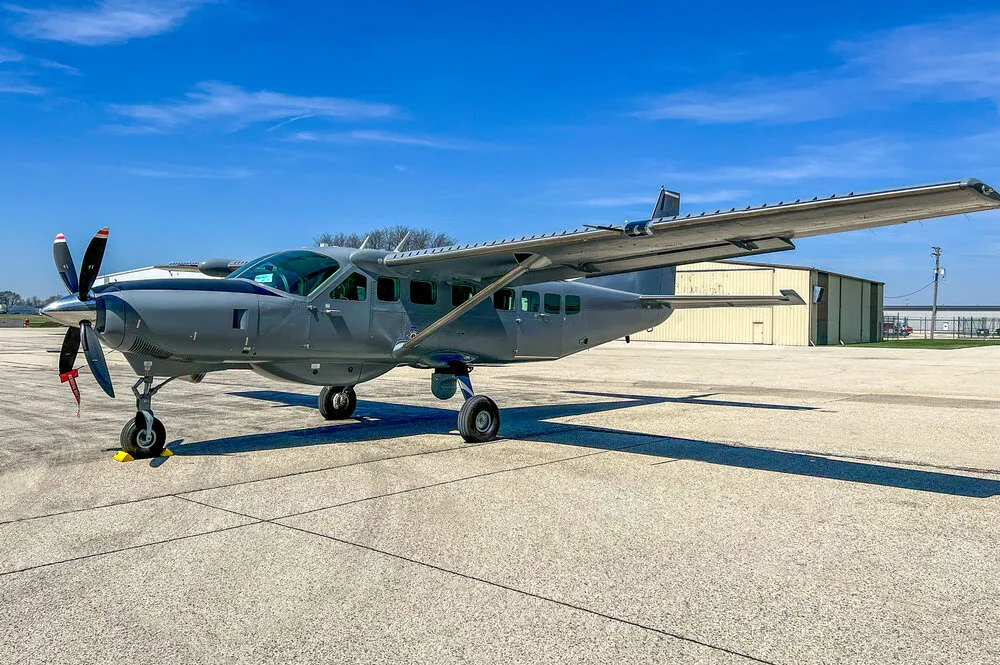
The Cessna 208 and 208B Grand Caravan define the light-turboprop utility segment. A single Pratt & Whitney Canada PT6A, rugged fixed tricycle gear, and short- and unpaved-strip capability let the Caravan operate from austere airfields with minimal support infrastructure. Endurance runs around five hours and range around 1,000 nautical miles, delivering real station time at a fraction of larger platforms’ operating cost.
The Caravan’s ventral hardpoint is a natural fit for a stabilized EO/IR turret (the standard sensor for airborne surveillance), and its low cruise speed and stable flight envelope suit sustained pattern work and long-dwell observation.
AIMS-ISR on the Caravan
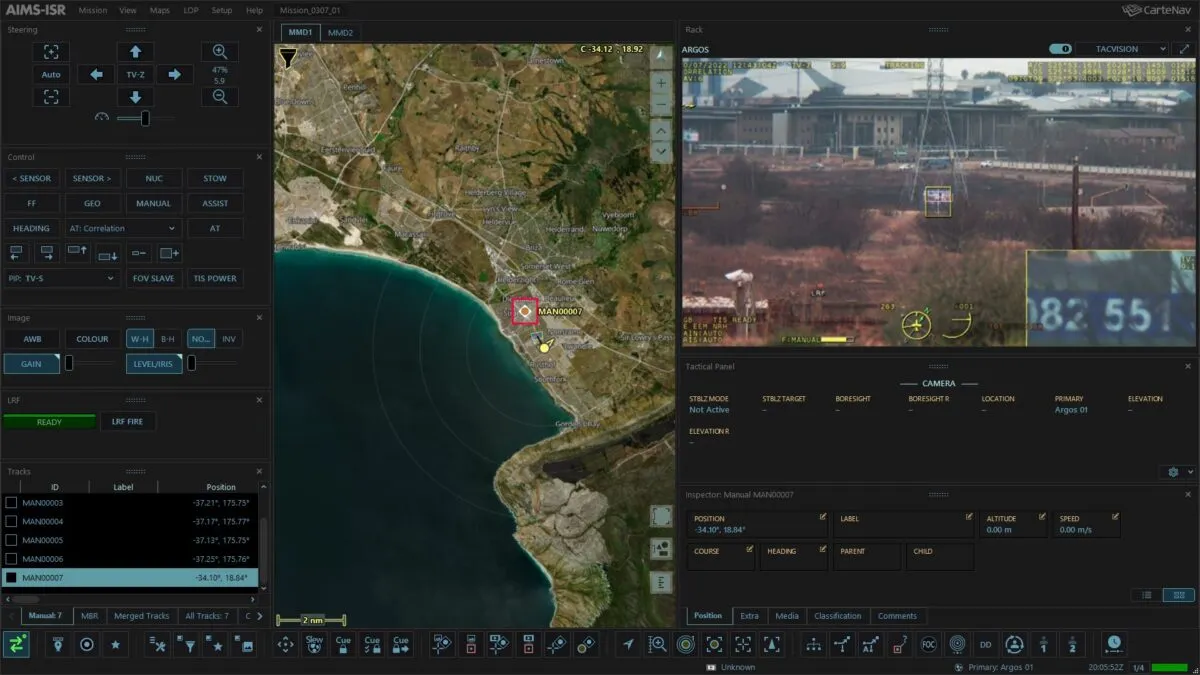
AIMS-ISR turns the Caravan into a single-operator integrated mission system. One workstation pairs a georeferenced moving map with real-time sensor video. The complete operating picture appears in one interface while the operator manages sensor control and data recording from the same console, reducing crew workload and training overhead.
All mission data (video, tracks, platform position, and sensor parameters) is recorded time-synchronized and georeferenced, ready for replay at debrief or archive for later analysis. Pairing with the AIMS-C4 air-to-shore data link extends the same operating picture to ground command in real time.
A sensor fit that scales
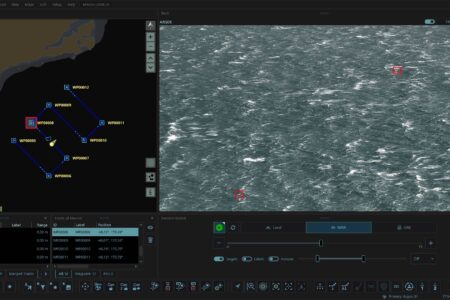
Because AIMS-ISR decouples sensor control from the mission picture, the Caravan can fly with a stabilized EO/IR turret, AIS receiver, downlink, or a custom fit without changing the mission system. There is no vendor lock-in and no ground-up reintegration when payloads change mid-service.
The Caravan’s power and payload budget accommodate several sensors at once. A typical fit pairs an EO/IR gimbal with AIS position data and a real-time downlink, so mission planners can field the minimum sensor set the mission demands and keep operating cost proportional to capability.
Mission profiles
- Police aviation: airborne overwatch, search support, and evidence-grade mission recording
- Border & security aviation: patrol and detection along land borders and coastlines
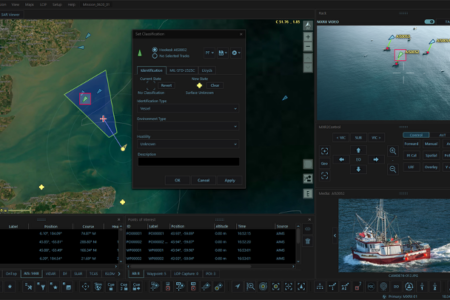
- Maritime patrol: vessel tracking and fisheries enforcement with EO/IR and AIS correlation
- Defence aviation: light tactical ISR with multi-sensor integration
- Light ISR: cost-effective persistent surveillance from austere airfields