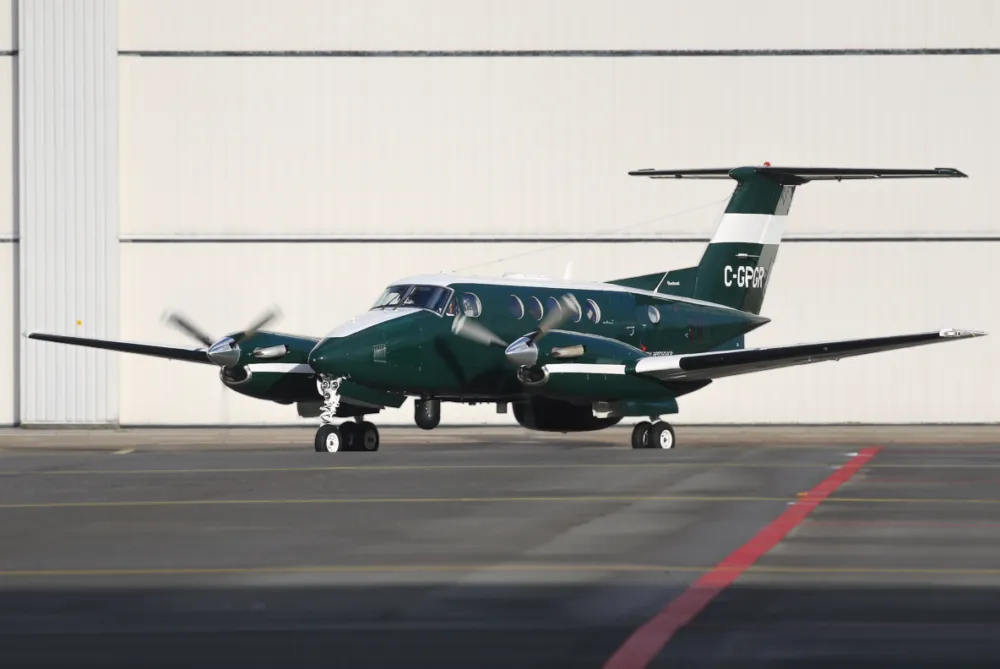
The King Air as a special-mission platform
The Beechcraft King Air is the world’s most widely missionized business turboprop. Its proven airframe, global support network, and structural flexibility are testament to decades of operational success. The pressurized cabin accommodates operator consoles, sensor racks, and crew comfort over extended missions, and established provisions for belly- and nose-mounted radar and EO/IR turrets make the type naturally suited to multi-sensor work. Twin-turboprop redundancy and a worldwide maintenance network give operators confidence across deployments.
From coast guard and civil surveillance to search and rescue and border security aviation, the King Air has earned its reputation as a workhorse for missions where dependability and sensor flexibility matter.
From the B200 to the 360ER
The King Air family spans variants suited to distinct mission profiles. The 200 and B200 offer a compact, economical fit for coast guard, civil surveillance, and public safety missions, while the King Air 250 adds improved short-field performance for search and rescue and remote-area operations.
The large-cabin models (300, 350, 350i, 350ER, and 360ER) form the backbone of maritime patrol and border security conversions. The 350ER’s higher gross weight and extended fuel give it the endurance long-duration surveillance demands, and the 360ER carries the family’s latest avionics with range beyond 2,500 nautical miles.
Whether compact or extended-range, every variant shares the King Air pedigree: robust powerplants, proven sensor integration paths, and the cabin real estate operators need for a complete mission workstation.
AIMS-ISR on the King Air
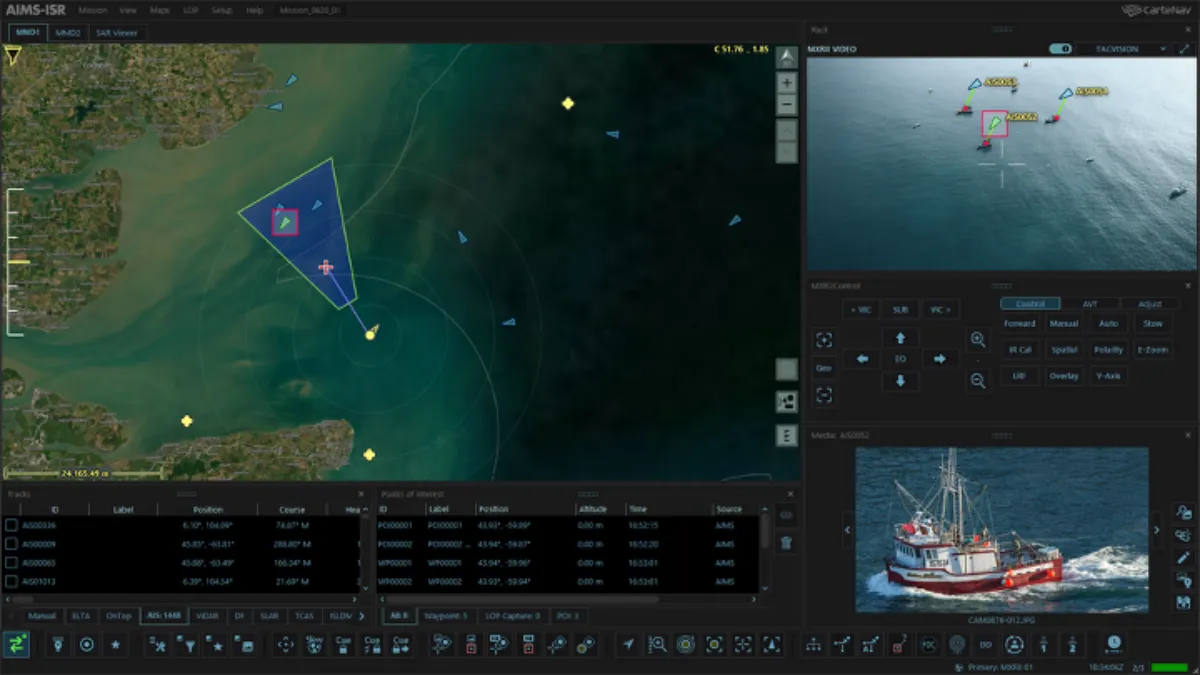
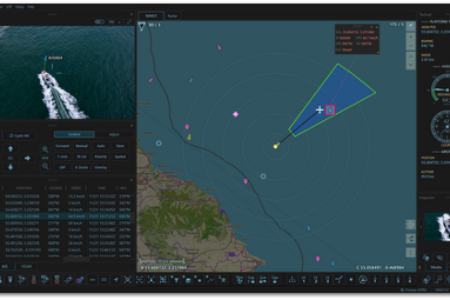
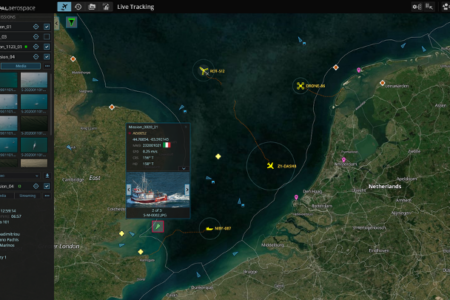
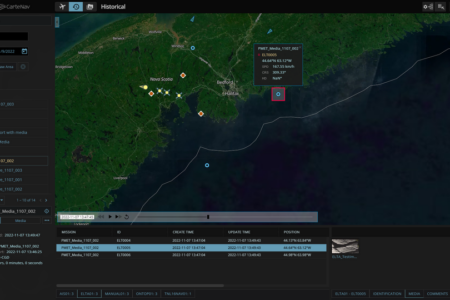
AIMS-ISR has been integrated with the King Air, placing an operator workstation in the cabin that fuses radar, EO/IR, AIS, and other sensor feeds into a single georeferenced operating picture. Every track and frame is recorded to evidence-grade standards for post-flight analysis, and the AIMS-ISR picture can stream ashore through AIMS-C4 for a common operating picture with ground command.
AIMS-ISR’s sensor-agnostic architecture means the operator chooses the radar and EO/IR payloads, not the software vendor. Whatever the fit, one interface translates sensor diversity into a unified mission picture.
Mission profiles
- Maritime patrol: long-endurance surveillance of sea lanes and exclusive economic zones
- Coast guard surveillance: persistent over-water observation for interdiction and rescue coordination
- Civil surveillance & public safety: infrastructure monitoring, disaster response, and law-enforcement support
- Search and rescue: extended-range search with EO/IR and recorded mission data
- Border & security aviation: persistent monitoring of land and littoral borders
- Aircrew training: a high-fidelity platform for mission qualification and sensor-operator development
- Firefighting overwatch: real-time fire progression mapping and incident command support
- Special-mission ISR: flexible multi-sensor integration for intelligence collection